Angie Font: A Playful Script Typeface for Web Designers
While designing a new landing page for a boutique coaching brand, I found myself in need of a font that could carry personality without sacrificing clarity. I had downloaded Angie a few weeks prior, intrigued by its "charming, playful characters" description. I decided to give it a real test in the hero section — and the results were more than I expected.
Bringing Personality to Digital Branding
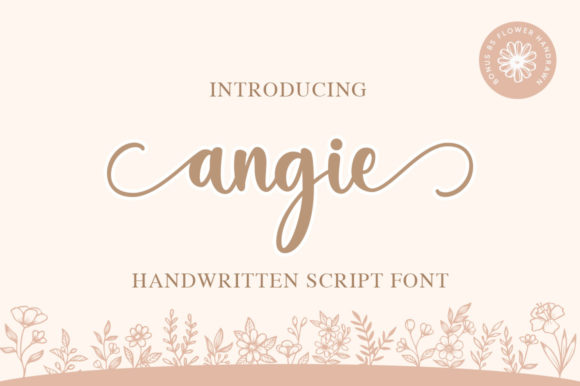
Angie is a script font that feels alive. Each letter seems to dance slightly along the baseline, giving a sense of motion and warmth. It’s not overly formal like some calligraphy fonts, nor is it too loose like a casual handwriting style. It strikes a perfect balance between elegance and approachability, which made it a strong contender for the client’s brand identity.
I used Angie for the logo treatment and hero headline, and the result was a fresh, feminine look that aligned well with the brand’s tone. Because the font is PUA encoded, I was able to access all the swashes and alternate characters directly from my design tool without needing special plugins or converters. That’s a huge plus for web designers who work across platforms and need flexibility in glyph access.
Performance in Real Web Layouts
I tested Angie in a few key areas of the site: the hero headline, a call-to-action button, and as a decorative accent in a testimonials section. In each case, the font held up well both visually and functionally. On desktop, the flourishes were clear and didn’t interfere with readability. On mobile, I scaled it back slightly and used it more sparingly, which kept the design clean and legible.
One of the challenges with script fonts is their legibility at smaller sizes. Angie is no exception — it’s best suited for display use rather than long-form body text or navigation menus. I used it at 36px and above for headlines and decorative elements, and avoided using it below 18px where possible. This helped maintain clarity across devices without forcing users to squint.
Readability and Responsive Design
When integrating Angie into the layout, I made sure to pair it with a clean sans serif font for body text and supporting copy. This contrast helped establish a strong visual hierarchy while keeping the user experience smooth. I used the script font for headings and decorative elements, and the sans serif for paragraphs, form labels, and buttons.
Testing the font over a light image banner in the hero section revealed another consideration: contrast. I had to darken the text slightly and add a subtle drop shadow to ensure it stood out against the background. This is a common adjustment with lighter, more decorative typefaces, but one that Angie handled gracefully.
Font Pairing and Digital Brand Consistency
Pairing Angie with a simple, modern sans serif created a nice balance between playful and professional. I used it with a light gray Roboto for body copy and form fields, which allowed the script font to shine without overwhelming the layout. For bolder calls to action, I paired it with a semi-bold Montserrat, which gave the design a cohesive yet dynamic feel.
This kind of thoughtful font pairing is essential for maintaining brand consistency across a website. Angie’s unique character makes it a great centerpiece for digital brand kits, especially for lifestyle brands, creative agencies, or wellness entrepreneurs who want to convey warmth and authenticity online.
Practical Considerations for Web Use
Before finalizing the font for the client’s site, I checked the file formats and webfont availability. Angie includes all standard formats (WOFF, TTF, EOT, SVG), which made it easy to embed via CSS or a web font service. I also appreciated the multilingual support — a must-have for any brand with international appeal.
From a licensing perspective, Angie is suitable for commercial use, which is a relief when working on client projects or online stores. I always recommend double-checking the license terms before deployment, especially if the font will be used in downloadable templates, SVG graphics, or embedded in a web application.